
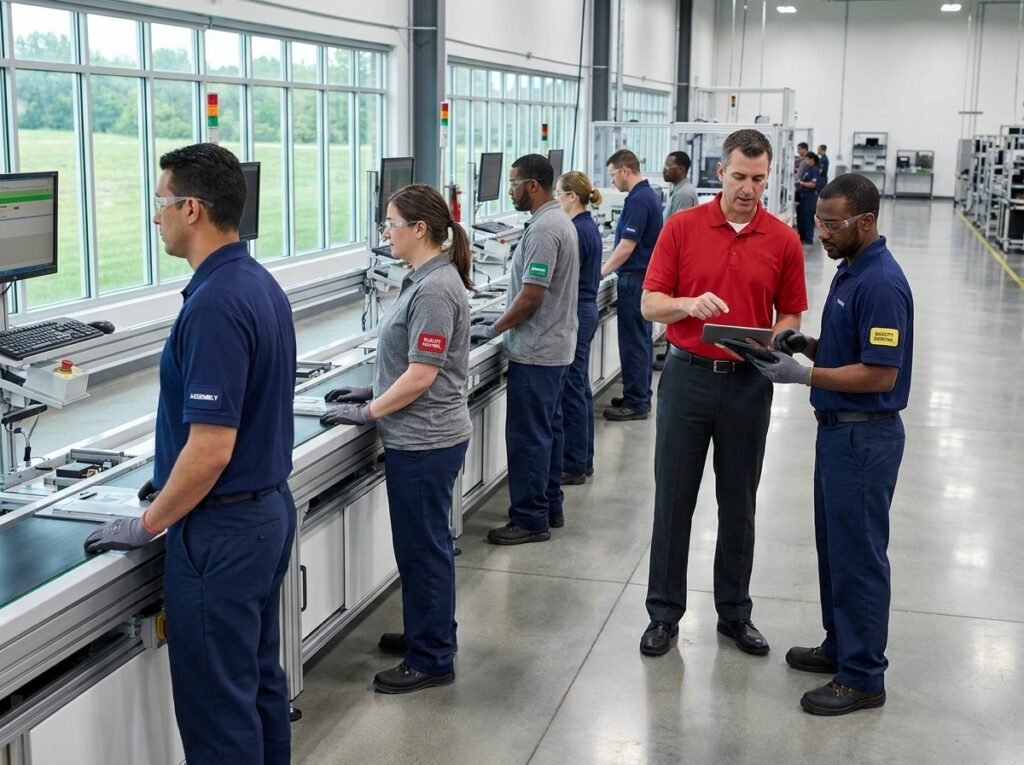
A shirt that feels fine on the drive in can turn heavy and damp two hours into a shift on the floor. The same shirt, pressed and sharp at 9am, can be creased by lunch. In Dubai that gap is wider than almost anywhere, because staff move between 40°C outside and hard air-conditioning inside, sometimes several times a shift. The fabric has to cope with both.
That is why fabric choice, not the cut or the logo placement, is what makes or breaks a uniform here. Get it right and staff stay comfortable, the garments hold their look, and you replace them less often. Get it wrong and you field complaints about heat and stiff collars, and reorder sooner than you budgeted for. This guide walks through the fabrics that work in the UAE climate, which suits which industry, how fabric weight changes the feel, what to ask a supplier, and the mistakes that cost businesses money.
Why fabric matters more in Dubai
Uniforms are not worn for an hour. People spend eight, ten, sometimes twelve hours in them, five or six days a week, then wash them and do it again. Over months, small fabric problems become the thing everyone talks about. In practice, staff rarely mention the logo or the pocket. They mention the heat, the itch, the collar that never sits right.
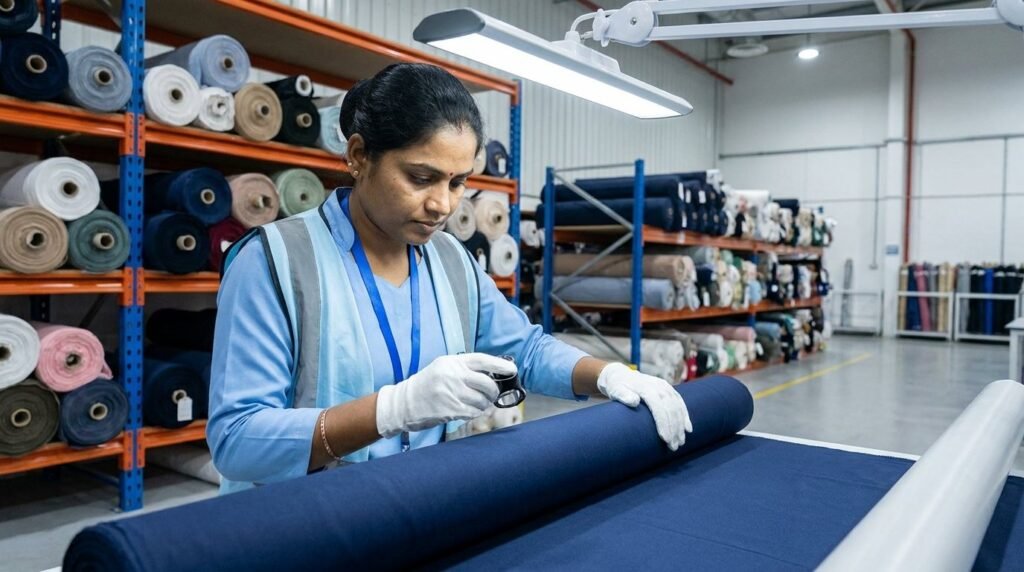
A good uniform fabric for the UAE needs to do a few things at once:
- Stay cool when someone is moving outdoors
- Feel comfortable in a cold, air-conditioned room
- Hold a press through a long shift
- Keep its colour through frequent washing
- Dry quickly
- Survive commercial or industrial laundering
What makes a fabric work here
Four things decide whether a fabric performs in this climate.
Breathability. Breathable cloth lets heat and moisture escape, which helps the body regulate temperature and cuts down on sweating. Cotton does this well by nature, though some engineered fabrics now match it.
Moisture management. This is not the same as breathability. Moisture-wicking fabrics pull sweat off the skin to the outer surface, where it evaporates faster. It matters most for people who work outdoors or on their feet all day: security, delivery riders, maintenance, hospitality, warehouse teams.
Durability. Uniforms take far more punishment than everyday clothes. Repeated washing, sun, stretching and movement break fibres down. Quality fabric holds its colour, shape, seam strength and surface, and resists pilling. A bit more spent upfront usually means fewer replacements later.
Wrinkle resistance. Some weaves crease far less than others, which keeps customer-facing staff looking sharp and cuts the ironing load. In a client-facing role it is worth paying for.
The fabrics most uniforms are made from
Poly-cotton blend
The workhorse of UAE uniforms, usually 65% polyester and 35% cotton, with 60/40 and 50/50 versions for different jobs. The polyester brings wrinkle resistance, shape retention, durability and fast drying. The cotton brings softness and breathability. It washes easily, dries quickly, holds colour and costs less than premium options. The trade-off is that it breathes a little less than pure cotton and can feel warm during long stretches outdoors. For most businesses it is the sensible middle ground.
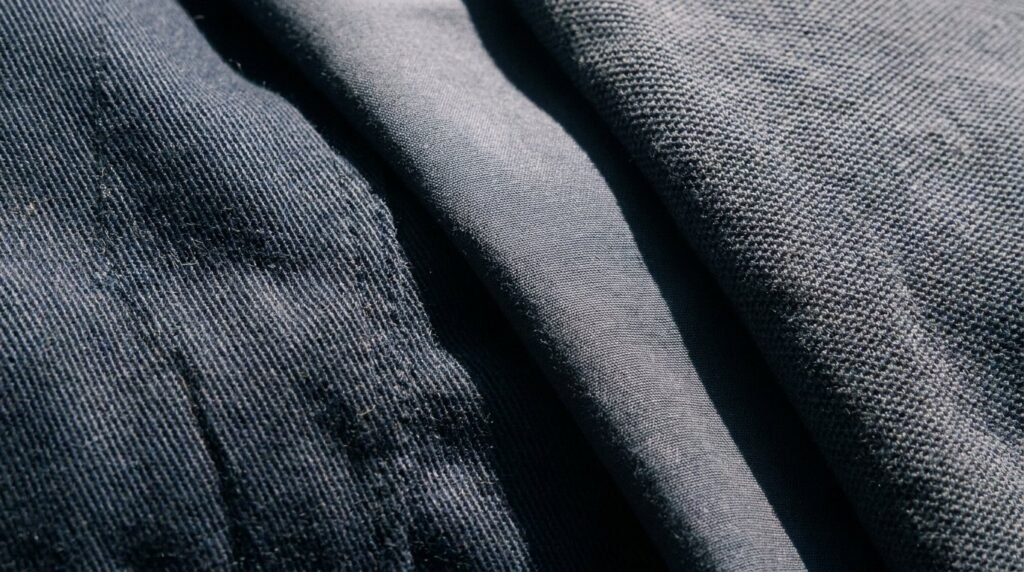
100% cotton
Still one of the most comfortable fibres you can put against skin, which is why it stays popular in healthcare and schools. It moves air well, feels soft, and is naturally hypoallergenic. The catch is maintenance: it creases, it can shrink if washed badly, it needs more ironing, and it takes longer to dry. Plenty of employers accept that trade because the comfort is worth it.
Technical performance polyester
Modern performance polyester is nothing like the stiff, heat-trapping polyester of twenty years ago. Today it often comes with moisture-wicking, four-way stretch, anti-odour treatment, UV protection and a light, fast-drying build. You see it more and more in healthcare, aviation, sport and industrial workwear.
Twill
Twill is a weave, not a fibre, recognisable by its diagonal ribbing. It is tough, tear-resistant and looks smart, which makes it a go-to for heavy-duty roles. It is woven from cotton, poly-cotton or polyester blends depending on the job.
Linen blends
Pure linen looks elegant and creases the moment you sit down. Most Dubai businesses go for a linen blend instead: the airflow and premium look of linen, with far better wrinkle behaviour. It is a favourite in luxury hospitality, resorts and premium restaurants.
| Fabric | Breathability | Durability | Wrinkle resistance | Maintenance | Best for |
|---|---|---|---|---|---|
| 100% cotton | Excellent | Medium | Fair | Medium | Healthcare, schools |
| Poly-cotton | Very good | Excellent | Excellent | Easy | Corporate, hospitality |
| Technical polyester | Good | Excellent | Excellent | Very easy | Industrial, logistics |
| Poly-cotton twill | Good | Outstanding | Very good | Easy | Manufacturing |
| Linen blend | Excellent | Medium | Fair | Medium | Luxury hospitality |
Fabric weight, and why GSM matters
Weight changes the feel as much as the fibre does. Uniform fabric is measured in GSM, grams per square metre. Higher GSM means more durability, more structure and more heft. Lower GSM means lighter, airier cloth that suits the heat. Heavier is not automatically better: a light technical fabric can outperform a heavy cotton one outdoors in a Dubai summer.
| GSM | Feel | Typical use |
|---|---|---|
| 120-150 | Lightweight | Corporate shirts, hospitality |
| 150-180 | Medium | Healthcare, schools |
| 180-220 | Durable | Retail, logistics |
| 220-280 | Heavy duty | Industrial workwear |
For most offices, 140 to 170 GSM hits the balance of durability and comfort.
Best fabric by industry
There is no single best fabric. A cloth that is perfect for reception can be wrong for a warehouse team, and a heavy industrial fabric would ruin the feel of a five-star hotel uniform. The right pick comes down to where people work, how physical the role is, and how often the garment gets washed.
Corporate offices
Corporate uniforms have to read as professional first, but staff still commute through the heat and walk between buildings. Poly-cotton shirts are the standard because they cover both: crisp and wrinkle-resistant from the polyester, soft and breathable from the cotton. For executives and client-facing teams, a premium cotton blend with a little stretch and an easy-care finish holds its look through a full day and feels a step up.
Hospitality
Hotels, restaurants and cafes need staff who look elegant while moving all day between cold interiors, hot kitchens and outdoor entrances. Poly-cotton covers front desk, concierge, housekeeping and restaurant shirts, staying crisp through heavy washing. Luxury and resort brands lean on linen blends for a relaxed, premium look. And more brands now add a touch of stretch for staff who are constantly on the move and carrying things.
Healthcare
Long shifts make comfort the priority, and hygiene sets the rest of the brief. Cotton-rich fabrics feel soft and breathe well for extended wear. Many providers prefer cotton-polyester blends because they last longer, shrink less, dry faster and hold colour through constant laundering. Some medical fabrics now carry antimicrobial finishes to keep uniforms fresher across a shift.
Schools
School uniforms have to survive active kids and dozens of washes a term while staying affordable for families. Poly-cotton is the usual answer: durable, comfortable and low on ironing, which parents appreciate. Some schools choose a softer cotton blend for feel, accepting a bit more care in exchange.
Aviation
Cabin crew and airport staff work long, continuous hours and need to look immaculate throughout. Wool blends, polyester blends and stretch performance fabrics are common, chosen for wrinkle resistance, breathability and easy movement.
Industrial and outdoor
This is where the choice gets technical. Construction, maintenance, logistics and manufacturing staff face direct sun, heat, dust, hard movement and frequent washing, and a light office shirt will not survive it. Poly-cotton twill is one of the toughest options, with high tear resistance and a long life. For roles with heavy heat and movement, technical polyester adds moisture management, UV resistance and fast drying.
| Environment | Recommended fabric | Main reason |
|---|---|---|
| Office | Poly-cotton blend | Professional and easy-care |
| Hotel | Poly-cotton or linen blend | Appearance and comfort |
| Restaurant | Performance blend | Movement and durability |
| Hospital | Cotton blend | Comfort and hygiene |
| School | Poly-cotton | Easy maintenance |
| Construction | Twill or technical polyester | Strength and heat management |
| Warehouse | Performance polyester | Moisture control |
Finishes that change how a fabric performs
A lot of modern uniform cloth is treated to do more than the base fibre allows:
- Moisture-wicking pulls sweat off the body. Useful for outdoor workers, hospitality and sports staff.
- Anti-wrinkle cuts ironing, which pays off for corporate, airline and hotel uniforms.
- Anti-odour keeps garments fresher across long shifts. Common in healthcare, fitness and industrial roles.
- UV protection matters here for anyone outdoors: security, landscaping, construction, delivery.
Sustainable options
More UAE businesses are weighing the environmental cost of their uniforms. There are good options, but they need to be balanced against durability. A “green” fabric that wears out in half the time is not actually greener once you count the replacements.
| Fabric | Sustainability benefit |
|---|---|
| Organic cotton | Grown with fewer chemicals |
| Recycled polyester | Made from recycled material |
| Bamboo blends | Renewable source |
| Recycled fabrics | Feed circular textile systems |
What it costs, and the better question
Fabric price in Dubai moves with composition, weight, order size, finishes, branding and where it is made. A firm ordering a few hundred shirts pays differently from a hotel group ordering tens of thousands. It is easy to fixate on the price per metre, but the cheapest cloth is rarely the lowest-cost choice. A uniform that fades, shrinks or turns uncomfortable after a few washes brings replacement costs that do not show up on the first invoice. The question worth asking is how much wear you get for the money.
| Fabric | Positioning | Best used for |
|---|---|---|
| Basic polyester | Budget | Promotional or short-term use |
| Poly-cotton blend | Mid-range | Corporate, hospitality, schools |
| Premium cotton blend | Higher-end | Executive and premium brands |
| Technical performance | Premium | Outdoor, industrial, active roles |
| Linen blend | Premium look | Luxury hospitality |
Recommended GSM ranges by industry:
| Industry | GSM range |
|---|---|
| Corporate shirts | 120-160 |
| Hospitality | 130-180 |
| Schools | 150-200 |
| Healthcare | 150-180 |
| Retail | 150-200 |
| Construction | 180-260 |
| Industrial workwear | 220+ |
Choosing a supplier
The supplier matters as much as the fabric. A good one does more than quote a price per metre: they recommend the right cloth for your roles, provide samples, match colours, test for durability, hold quality through production and stand behind replacements. Before you commit to a large order, ask:
- What is the exact fabric composition? Get the real percentages of cotton, polyester and elastane. A “cotton feel” does not mean there is cotton in it.
- What is the GSM? It tells you whether the cloth suits the working environment.
- How does it behave after washing? Does it shrink, fade, lose shape or crease?
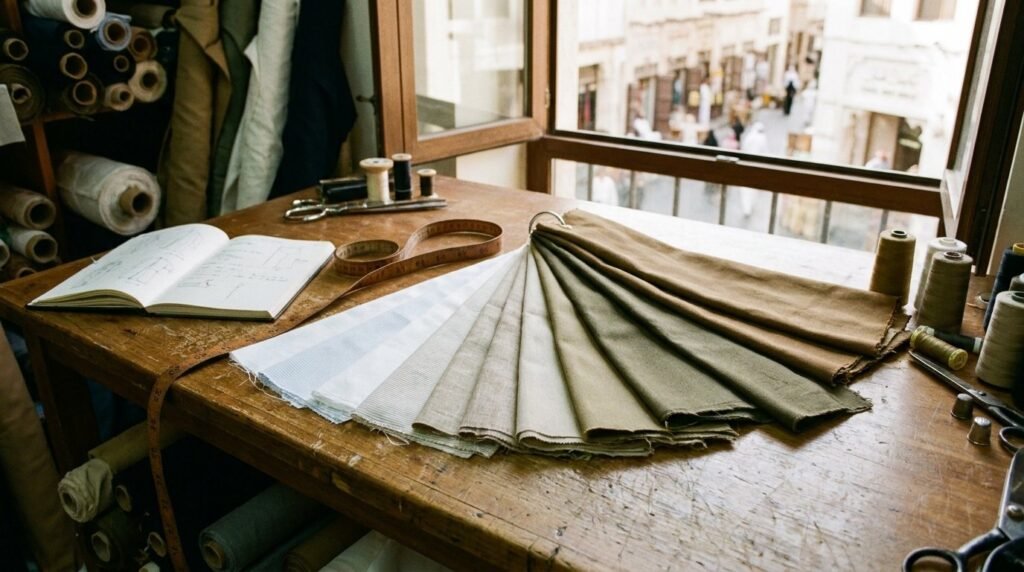
- Can I see and handle a physical sample? Never approve a bulk order from a photo. Cloth that looks premium on screen can feel completely different in the hand.
- Is it suited to the UAE climate? A supplier who works in this market will understand local conditions far better than a generic textile trader.
A serious uniform project usually runs through the same stages: working out the requirements per role, choosing and approving fabric from samples, design and branding, a prototype before bulk, then production with checks throughout rather than only at the end, and finally delivery, sizing and replacement support. The prototype step is the one that saves money, because it catches problems before you have made ten thousand of them.
Common mistakes
Picking looks over function. A fabric that impresses in a showroom can fail on a full shift. A uniform is a working tool, not a fashion piece.
Buying the cheapest option. Low upfront cost often turns into faster replacement cycles, staff complaints and a tired-looking team.
Ignoring the people who wear it. Staff wear the uniform every day and know what fails. Test samples with a small group before ordering at scale.
Overlooking laundry. A hotel and a construction firm both need uniforms, but industrial laundering demands tougher fabric. Match the cloth to how it will actually be washed.
Not checking colour stability. Dubai sun fades weak dyes. Ask about colourfastness, UV resistance and wash durability before you sign off.
Fabric testing checklist
| Test | Why it matters |
|---|---|
| Breathability | Comfort in the heat |
| Colourfastness | Guards against fading |
| Shrinkage | Keeps sizing correct |
| Tear resistance | Measures durability |
| Stitch strength | Prevents seam failure |
| Wash testing | Simulates real use |
| Comfort | Confirms staff will actually wear it |
Frequently asked questions
What is the best uniform fabric for Dubai weather?
It depends on the industry, but poly-cotton blends are the most popular all-rounder because they mix comfort, durability and wrinkle resistance. For outdoor work, technical moisture-wicking fabrics usually do better.
Is cotton better than polyester for Dubai?
Not automatically. Cotton breathes and feels better, but polyester blends last longer, dry faster and need less care. Most businesses land on a blend for the middle ground.
What fabric is best for hotel uniforms?
Poly-cotton, because it stays professional through frequent washing. Luxury brands often add linen blends or premium performance fabrics.
What fabric is best for construction uniforms?
Heavy poly-cotton twill and technical polyester, for durability, moisture management and heat resistance.
How long should a quality uniform last?
With normal use and care, one to two years or more. Industrial uniforms wear out sooner because of the heavier conditions.
Where can I buy uniform fabric in Dubai?
Through the textile markets, wholesale suppliers, and uniform manufacturers who handle fabric, production and branding together. The Bur Dubai Textile Souq suits smaller orders where you want to feel the cloth first, while Dubai Textile City in Al Warsan serves bulk and wholesale.
Getting it right
Choosing uniform fabric here comes down to balancing comfort, durability, appearance and cost, and no single fabric wins on all four. An office, a hotel, a clinic, a school and a building site all pull in different directions. For most businesses poly-cotton is the dependable default. Roles with real physical demand are better served by technical performance fabrics or heavy twill.
The best uniform programmes start by looking at how staff actually use the garment through a real day, then test cloth, involve the people wearing it, and pick a supplier who knows the UAE market. We manufacture uniforms to spec here in Dubai, across corporate, hospitality, healthcare, education and industrial work, so if you want help matching fabric to your roles, see how we handle quality or talk to our team about samples and bulk orders.