
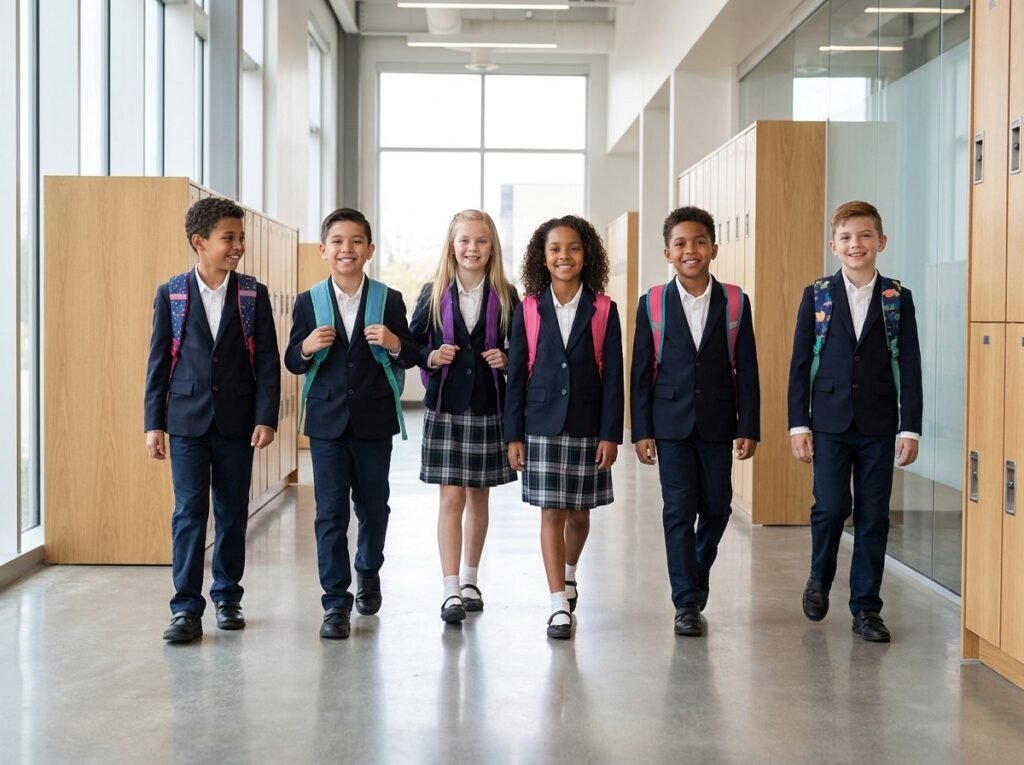
Every September, a handful of kids turn up on day one in brand-new black trainers and get sent to change. The shoes are black. They look smart. But the policy said plain black leather, and trainers are not that. It is one of the most common uniform slip-ups in UAE schools, and it is easy to avoid once you know what the school actually means.
School uniforms carry more detail than most parents expect: approved sweaters, a specific shoe type, a separate PE kit, hair rules, even sock colours. This guide covers all of it, from everyday clothing to sportswear, grooming, footwear and the practical business of keeping it going through the year. Policies differ from school to school, so always check your own school’s handbook or approved supplier list first. What follows is what most schools across the UAE have in common.
Why uniforms matter
A uniform does a few practical things at once. It puts every child in the same clothes, which takes the morning outfit argument off the table and makes the school run faster. It makes students easy to spot on trips and around a busy campus. And it quietly blurs the gap between families who can spend a lot on clothes and those who cannot, which matters more than it sounds. Most kids grumble for a week, then stop noticing.
| Benefit | Why it matters |
|---|---|
| Equality | Plays down visible differences in what families can afford |
| Safety | Students are easy to identify on campus and on trips |
| Routine | Fewer decisions in the morning, for kids and parents |
| Belonging | Shared kit builds a sense of being part of the school |
The everyday uniform
Requirements vary a little between schools, but the daily kit is fairly consistent across private and international schools here. The point is simple: a child who arrives clean, comfortable and ready to sit down and work.
Shirts and tops
Official shirts or branded polos, clean and ironed. Boys are usually expected to keep shirts tucked in through the day unless the school says otherwise. Schools tend to rule out oversized or tight fits, undershirts with visible logos, and anything that is not on the approved list. Keep one spare clean shirt at home. White shirts and lunch have a way of finding each other.
Trousers, shorts and skirts
Bottoms need to match the school’s approved colour and cut.
| Item | Typical requirement |
|---|---|
| Trousers | Standard straight fit |
| Shorts | Knee length or just above, where allowed |
| Skirts | At or below the knee |
| Denim | Not allowed |
| Fashion tailoring | Not allowed |
Slim-fit or heavily tailored trousers usually get flagged because they change the look of the uniform. The same goes for skirts taken up after purchase. Small tweaks for comfort are normally fine. Reshaping the garment is not.
Cooler months
Winter mornings here can bite more than visitors expect, especially standing through an outdoor assembly. Approved layers usually cover official sweaters, branded cardigans, school fleeces and, at some schools, a blazer. Personal hoodies, sports jackets and fashion sweaters are generally not allowed in class. Plenty of parents buy a plain navy sweater that looks near-identical to the official one. Sometimes it passes. Sometimes it does not. Checking the approved supplier list first saves the second trip.
Grooming and presentation
Uniform rules do not stop at clothing. Most schools also set expectations for grooming, and they are aimed at cleanliness and safety rather than fashion.
Hair
Clean, tidy, off the face, and tied back if it is longer than shoulder length. Schools commonly rule out unnatural colours, shaved patterns, mohawks and anything that pulls attention in a lesson. In practice, teachers know a six-year-old will not hold a neat ponytail through a full day, and they judge accordingly.
Jewellery
Jewellery policies are deliberately plain.
| Item | Usually allowed |
|---|---|
| Small stud earrings | Yes, often one per ear |
| Watch | Yes |
| Religious items | Usually, if discreet |
| Bracelets | Usually not |
| Necklaces | Discouraged unless tucked away |
| Large earrings | No |
This is about safety, not looks. Loose jewellery is a hazard in PE and on the playground.
Makeup
Primary students are expected to come without cosmetics. Most schools rule out makeup, nail polish, false nails, lash extensions and facial piercings. Some secondary schools allow a little leeway for older students, but it varies, so check the handbook rather than guess.
Footwear, the one that trips people up
Footwear is the single most common reason a student gets pulled up on uniform. Parents buy black athletic shoes, assume they qualify, and often find they do not. Most schools want:
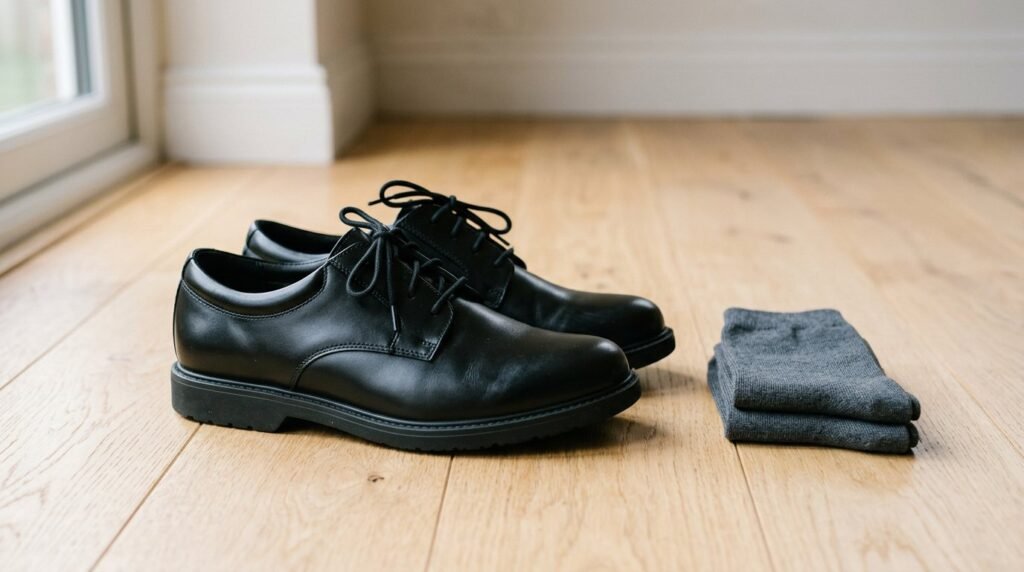
- Plain black leather shoes
- Flat sole, closed toe, closed heel
- No logos, no coloured stitching
- Matching black or dark socks
Sports shoes stay for PE unless the school says otherwise. A decent leather pair costs more upfront but tends to outlast the cheap ones, which matters for younger kids who spend break sprinting across a playground.
PE and sports kit
PE kit is built for movement and grip, so it is a separate set from the daily uniform. The specifics shift between schools, but the essentials hold steady.
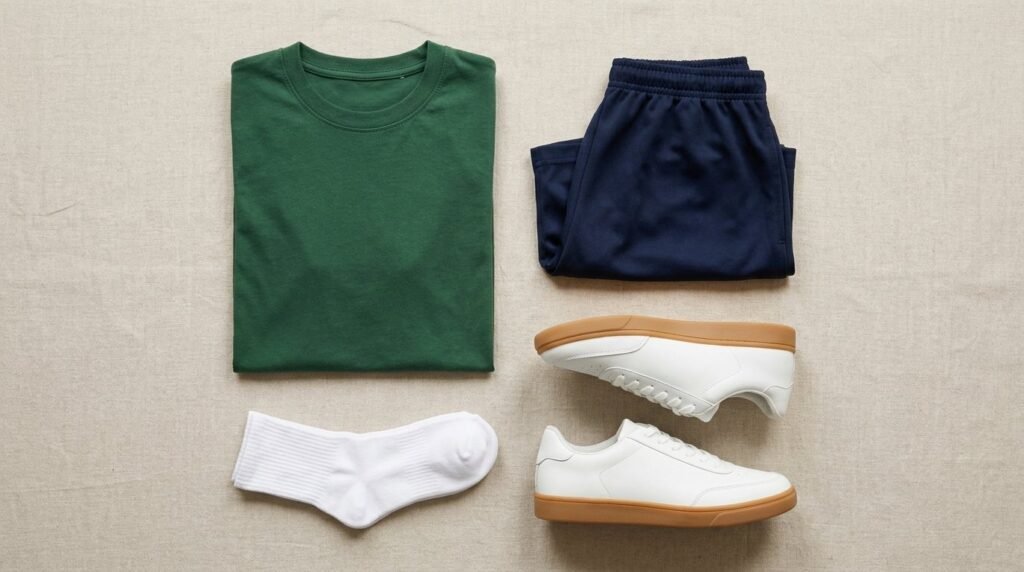
| Item | Standard | Notes |
|---|---|---|
| PE T-shirt | Official branded or house shirt | Often colour-coded by house |
| Shorts | School-approved athletic shorts | Sensible length |
| Track pants | Plain navy or branded | Usually for winter |
| Sports jacket | School branded | Optional or seasonal |
| Sports socks | White or approved | Cushioned athletic socks |
Many schools split students into houses for sports, each with its own shirt colour. A different brand in “nearly the same colour” almost always gets a no. Uniformity is the point.
Shoes for PE
PE footwear is a different animal from school shoes. Schools generally want non-marking trainers with proper running-shoe support and a secure lace or Velcro fastening, with clean soles for indoor courts. They tend to rule out fashion sneakers, slip-ons, sandals, football boots (unless a session needs them) and anything with wheels. Non-marking soles keep the gym floor intact, which the facilities team will thank you for.
Swimming
If swimming is on the timetable, you will need a bit more kit.
| Item | Needed |
|---|---|
| Swimsuit or trunks | Yes |
| Swim cap | Yes |
| Goggles | Recommended |
| Towel | Yes |
| Waterproof bag | Recommended |
Most UAE schools require a swim cap for hygiene, whatever the hair length. Label every piece. Towels and goggles vanish after a swimming lesson at a remarkable rate.
Other bits you may be asked for
Depending on the sport and season, the school might also ask for a reusable water bottle, a sun hat for outdoor games, sunscreen where it is permitted, shin guards, a mouth guard for contact sports, or a yoga mat. These are usually flagged well before term starts.
Summer and winter
Most schools run two versions of the uniform. Summer leans on short sleeves and lighter fabric, with shorts where they are allowed. Winter brings in long sleeves, an official sweater or fleece, a cardigan, and a blazer at some schools. The catch that surprises new families: only school-approved outerwear is allowed in class, so a smart navy jacket that matches perfectly can still be turned away.
Bags, lunch and labelling
A good school bag is durable, the right size for the child, comfortable, and easy for a younger one to carry. Padded shoulder straps are worth it for growing backs. Rolling bags are often discouraged because they jam up corridors and stairs. Lunch boxes are not strictly uniform, but many schools ask for reusable, leak-proof containers and have allergy rules that ban certain foods, so it is worth reading those before you pack.
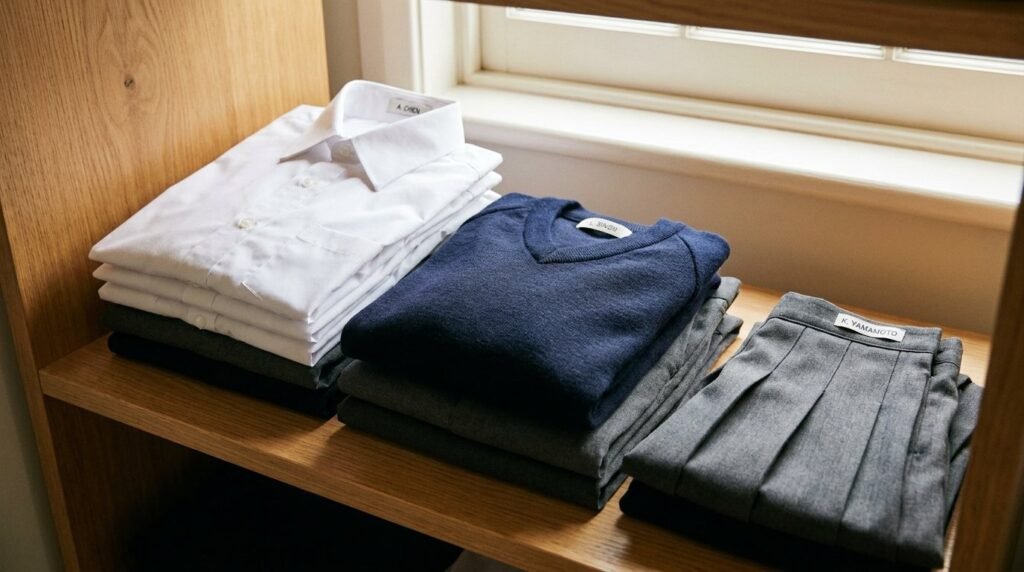
And label everything. Uniforms, shoes, PE kit, jackets, bottles, lunch boxes, hats, sweaters, towels, swim caps. Kids shed layers all day and the lost-and-found fills up fast. Iron-on labels or waterproof name stickers take a few minutes and save you replacing a branded sweater that was not cheap.
How many sets to buy
No universal answer, but this is roughly what experienced parents land on.
| Item | Suggested quantity |
|---|---|
| Shirts | 5 to 7 |
| Trousers or skirts | 3 to 5 |
| Sweaters | 2 |
| PE kits | 2 |
| Sports socks | 6 to 8 pairs |
| School socks | 8 to 10 pairs |
| School shoes | 1 pair |
| Sports shoes | 1 pair |
One extra shirt beyond your first guess rarely feels wasted by mid-term.
Washing and care
Uniforms are a real cost, more so with two or three children, and a bit of care makes them last. Wash to the garment label, keep whites separate, go easy on bleach, and get sportswear in the machine soon after it is worn. Fasten buttons first and turn printed items inside out. When you iron, use the right heat, keep the iron off logos and prints, steam the heavier fabrics, and hang things straight away. A creased uniform is a small thing, but most schools read presentation as part of taking responsibility.
Common mistakes
| Mistake | Better move |
|---|---|
| Black trainers | Plain black leather shoes |
| Fashion-fit trousers | Standard school fit |
| Generic navy sweater | Official school sweater |
| No name labels | Label every item |
| No spare PE kit | Keep one at home |
| Oversized “to grow into” | Correct fit with modest room |
Buying two sizes up to stretch the year usually backfires. Clothes that swamp a child are uncomfortable, look untidy, and get in the way during sport. A little growing room is sensible. A lot is not.
Getting the size right
Kids grow fast, sometimes between the fitting and the first week. When you shop, put shoulder fit ahead of sleeve length, check the waistband is comfortable, keep skirts at the required length, and leave only a little room to grow. Have the child move before you buy. If they cannot run, bend or raise their arms easily, the size is wrong.
Reusing and donating
More schools now push for less waste, and it is easy to join in. Pass on outgrown uniforms in good condition, buy second-hand through the school’s sales, repair small tears instead of binning the garment, and recycle worn-out fabric where you can. Some schools run an annual uniform swap, which is a gift when a young child is growing through sizes every few months.
The two-minute morning check
A quick run-through before the door saves a lot of grief later:
- Shirt clean, ironed, tucked in where required
- Correct trousers or skirt, approved sweater if needed
- Hair neat, long hair tied back, nails clean, no makeup or polish
- Plain black leather shoes, clean, matching socks, laces tied
- Bag packed: water bottle, lunch, homework, and PE kit on PE days
Daily uniform vs PE kit
| Feature | Daily uniform | PE kit |
|---|---|---|
| Purpose | Classroom | Sport |
| Top | School shirt or polo | Official PE T-shirt |
| Bottoms | Trousers, shorts or skirt | Sports shorts or track pants |
| Shoes | Black leather shoes | Non-marking trainers |
| Socks | School socks | Athletic socks |
| Outerwear | School sweater or blazer | Sports jacket |
| Jewellery | Minimal | Removed for activity |
Frequently asked questions
Can students wear branded trainers instead of black leather shoes?
Usually not. Most schools specifically require plain black leather shoes for everyday wear, and trainers stay for PE.
Can children wear hoodies?
Generally no. Only official school outerwear is allowed in class.
Are the jewellery rules the same at every school?
No. They vary, though most schools only allow small stud earrings and a watch.
How many PE kits should I buy?
Two sets suit most students, especially if PE runs more than once a week.
Do schools allow dyed hair?
Most rule out unnatural colours and extreme styles.
Can students wear makeup?
Primary schools generally say no. Some secondary schools allow a little, depending on policy.
Can uniforms be altered?
Minor changes for comfort are usually fine as long as they do not change how the garment is meant to look. Check the school’s policy before you alter anything.
Can children wear smartwatches?
Some schools allow them, others restrict wearables in lessons. Check the technology policy.
Are religious garments allowed?
Most schools accommodate religious and cultural dress while keeping the overall uniform consistent.
Before you buy
A uniform is more than a dress code. It sets a calm, focused start to the day, keeps the playing field level, and gives kids a way to feel part of the school. Get the everyday clothing, grooming, shoes and sportswear right before term starts and you sidestep most of the usual first-week headaches.
Every school runs its own policy, so check the latest one, or the approved supplier list, before you spend. Requirements change from year to year, and the official guidance is what keeps your child sorted from day one. If your school lets you use an outside supplier, we make school uniforms to spec here in Dubai, and you can talk to our team about fabrics, sizing and bulk orders.